Once a darling of the mirrorless camera crowd for the better part of the last few years, with the release of the Sony A7 Mark III, it raised the bar on -well, you know when it was released-out in the commercial arena in 2018. People took it as a very professional-looking camera with an acceptable price tag. Should you, however, still be considering this camera today? Does it continue to hold up to this rating as ground-breaking? Can it measure up versus all the other fantastic cameras out there today?
My Experience with the Sony A7 Mark III
This is my A7 Mark III Sony camera, and I’ve used it for over 3 years. Thousands are spent on photos and videos, including those in street and astrophotography, portraits, and product photography. All this stuff belongs to this channel, and it sees all corners of the world with me. Thus things are safe to say that this camera has truly analyzed its limits.
Why the Sony A7 Mark III Was a Game Changer
When it came out, this was the camera that flipped the script for the mirrorless camera segment. Sony could have easily branded the A7 Mark III as “the all-you-need” camera-from everything it could achieve in both shooting stills and shooting video, A7 has it all. If, however, it were to be defined by other series names in the Sony, it would have qualified under S series for the video part and under R series for the still photography area.
Key Characteristics and Performance
- Image Quality: The A7 Mark III houses a 24-megapixel full-frame CMOS sensor that renders impeccable and exquisite photos and videos.
- Low Light Performance: The camera has a highly efficient performance even at high ISO settings (maximum of 25,600) for low-light conditions. I have used it for both astrophotography and shooting the Northern Lights, where it performs excellently in low-light situations.
- Autofocus: Speedy autofocus, Eye Af, and Animal Eye Af make this ideal for situations of wildlife photography.
- Fast: It shoots at a rate of 10 frames per second, making it perfect for wildlife photography or action in sports.
- In-Body Stabilization: It incorporates in-body image stabilization, which is quite handy for video purposes.
- Video Quality: It records videos in 4k at a maximum of 30 fps, while in Full HD at a high of 120 fps – ideal for slow-motion shots.
- Dual Slot: Not all camera models possess this feature; the A7 Mark III has dual card slots, thus allowing separation of video files and photos.
Glaring Disadvantages and Needed Improvements
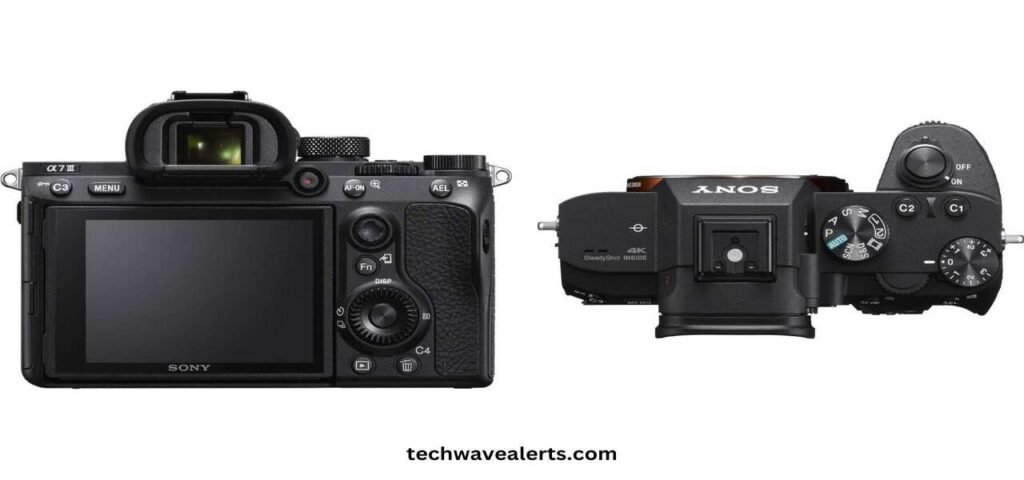
- Flip Screen: One of the most vexing omissions is the absence of a flip screen, which makes things rather difficult even in terms of self-shot angles. Even in certain photography scenarios, having to crouch down to look at a frame is cumbersome.
- Video Constraints: It can shoot at a maximum of 30 fps at 4K resolution, while others can shoot 4K videos at 120 frames per second, like the latest devices. The A7 Mark III also has a limitation of color depth at 8-bit, while the more modern devices support up to 10-bit.
- Menu Scheme: A complex and cluttered menu system for the camera could be tough to get familiarized with because it may require some time, particularly for people who haven’t yet wielded the Sony cameras.
- Stabilization and Screen Quality: Stabilization, however, is not an ultra-performance and the back LCD screen could have a much higher resolution and perform better under bright sunlight.
Good Features on the Sony A7 Mark III
- Build Quality: A7 Mark III is built sturdily and weather-sealed, allowing it to be used perfectly in outdoor photography in all sorts of weather.
- Battery Life: Z battery has an impressive lifetime across the board even in temperatures such as -30 degrees centigrade.
- Lens Availability: The camera provides compatibility for just about every single Sony E-mount lens available commercially along with additional third-party lenses from companies such as Sigma, Samyang, and Tamron.
Why Lens Investment Might Make More Sense
Investing in better lenses can often yield more significant improvements in image quality than upgrading the camera body. Sharpness and the desired “look” in your photos often come primarily from the lens.
Pricing and Value
The A7 Mark III is priced around 2,000 Euros when bought new, making it affordable for a full-frame mirrorless camera. However, the price difference between the A7 Mark III and A7 Mark IV is small, and if your budget allows, you might want to consider the newer model. That said, the A7 Mark III is frequently discounted, and the second-hand market offers great deals, sometimes as low as 1,500 Euros with a lens. The savings can then be spent on lenses, making it a fantastic value for money.
Conclusion
Ultimately, the purchase decision for the Sony A7 Mark III relies solely on what you need, the quality you deserve, and your budget. It is indeed a really versatile and capable camera that produces amazing results even at this time. It would be a refreshing step up for any loyal users of the brand who are considering upgrading from an older model or any customer looking to move from a crop sensor or DSLR to a full-frame mirrorless camera. For those wanting extremely best quality available, new models might outperform the A7 Mark III. Follow for more updates on Tech Education.