What’s up? I managed to use the Google Pixel 9 Pro Review a week ago and so far it seems best-consuming. Be honest with you, I felt that this time Google would do something to really ground the Pixels in the lineup of relevant smartphones. And dude, might I say that they probably did? Too early to tell, of course, but it feels like the Pixel is finally at a place where you can put it forward as a contender in the very real high-end flagship phone contest. This updated design turns heads with a very unique approach to value propositioning to its user base. Fun, I would say; it’s sure as hell one of the most fun smartphones I’ve tested in a long time. This might be overkill, but in the last couple of years, nobody has really been concerned about making phones any more fun for their users, and it genuinely looks like Google is trying to change that with the Pixel 9 lineup. So I’m going to document my experience about this device, the Pixel 9 Pro, so that you could understand better whether this phone could be the phone for you or not.
Design and Build Quality
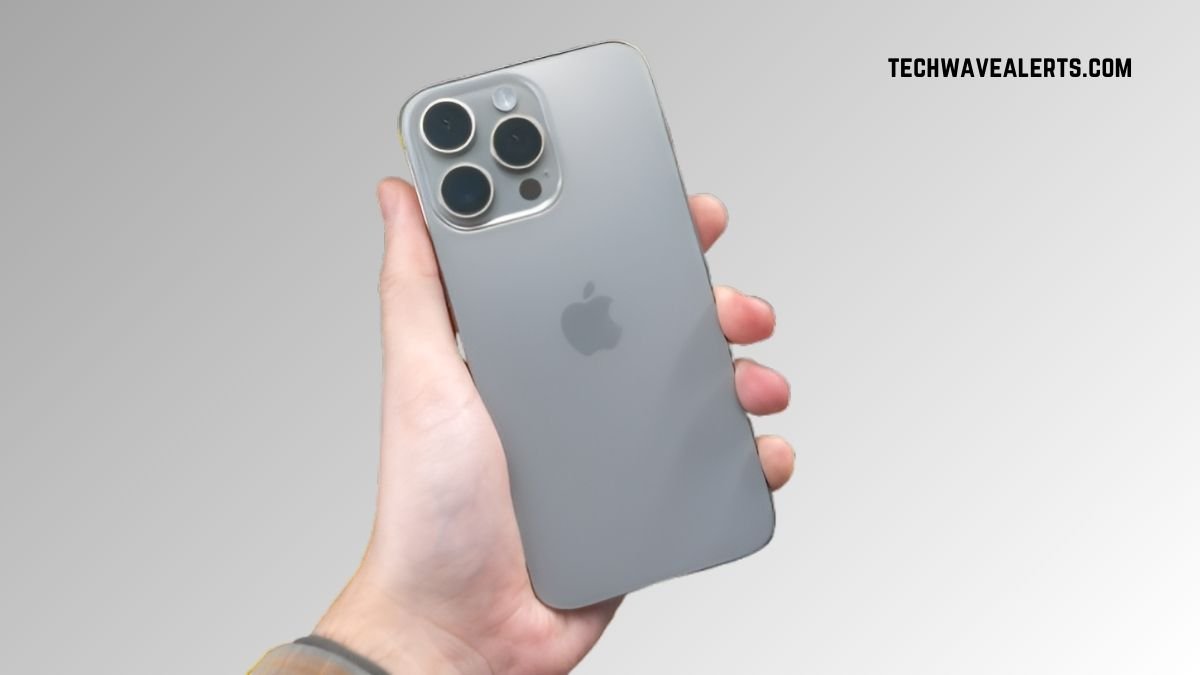
Okay, first let’s talk about the facelift that the Pixel 9 Pro received. Google decided to go with what works in this category, using a blueprint that many other popular flagships have been using for years now. You now have a completely flat front and back panel connected by a flat metallic frame. Does it sound familiar? Yes, but does it also look good? Absolutely. I already know that there are vocal critics out there saying that Google essentially created an iPhone with the Pixel 9 lineup, and I can’t completely disagree because, no lie, the Pixel 9 Pro gives me some serious iPhone 14 Pro vibes with its polished frame and frosted back. But let’s be honest: the Pixel is far from being the only phone that “copied” this look, and rather than being a hater, I applaud Google for taking this familiar look and committing to its execution.
When I first got hands-on with the Pixel 9 Pro, I was surprised at how well it was put together.
It immediately became clear to me—and many others at the Pixel 9 keynote—that this was the most premium Pixel we’ve seen by a considerable margin. One week later, that sentiment has only grown stronger in my mind. There are so many things Google did right with this design that I’ve noticed. For example, the aluminum frame is slightly rounded on the edge and seamlessly blends into the glass on both the front and back, making it more comfortable to hold in the hand. The new pill-shaped camera housing also works really well, giving the phone a lot of character while still maintaining the overall premium aesthetic. I love how they went with a matte finish as opposed to a polished one like they normally do with the Pro models. This makes the entire back of the device look a lot more stealthy and clean as it contrasts nicely against the frame, especially in this absolutely gorgeous Obsidian colorway.
Display
The main point now, though, is that the Pixel 9 Pro will come in two sizes: the regular Pixel 9 Pro which is a 6.3-inch screen Pixel 9 Pro XL which has an even bigger display at 6.8 inches. Both feature the super-actual LTPO OLED full HD+ panels and will be having new peak brightness levels at 3,000 nits. They’re also equipped with the new ultrasonic in-display fingerprint readers that are faster and more reliable than the dated optical sensors Google was using. These displays are some of the best on any smartphone today. Now, the bright new peak brightness really alters things for the better for outdoor usage on a sunny day, while it is great that the Pixel can compete in this area with the others. The slim symmetrical bezel is subtle, but it does improve the user experience, making it seem to be a more luxurious device.

Performance and AI Features
When it comes to performance and features, without question, the thing Google emphasized the most was AI. To be fair, AI has been the most over-promised and under-delivered thing up to this point, but both Pixel 9 models are rocking the new Tensor G4 chip—a processor not meant to be the most powerful in terms of standard benchmarks but optimized specifically for AI-related tasks. It’s also now beefed up with 16GB of RAM, a step up from last year’s 12GB, and a welcome change. The new Pixel 9 Pro also has a vapor chamber to help keep the phone cool during intense workloads. So far, I haven’t noticed any major flare-ups like some older Pixels struggled with.
From a general, non-AI day-to-day perspective, the Pixel 9 performs great. Navigating around Android OS is smooth, there’s virtually no throttling on the high refresh rate, and gameplay has been enjoyable and stutter-free.
AI Features and Functionality
Now, when it comes to the bevy of AI features that Google has been touting on this phone, there’s definitely a varying degree of usefulness. For example, the Pixel 9 Pro can now use Gemini to summarize YouTube videos quickly and easily. It’s surprisingly fast and useful when you just want the gist of what’s being said without manually scrubbing through the video. You also get access to the new reimagine feature on the magic editor, which works really well. You select a part of the photo, like the one I have here, and you can reimagine it with something like storm clouds. After performing its AI magic, it does a surprisingly good job transforming the picture into what you asked for.
Another neat addition is Pixel Studio on the Pixel 9 Pro—Google’s AI image generator that can create images for you based on written or verbal prompts. It’s surprisingly fast and definitely a feature that will impress anyone who tries it out, though it might just be a parlor trick most people show to friends. There’s also the new AdMe feature on the camera, which works fairly well but probably won’t be used frequently since it’s often easier to ask someone else to take a photo for you.
Gemini Live and AI Assistance
A new AI feature that has impressed me a lot is Gemini Live, exclusive to Gemini Advance, a paid service, but you do get a one-month free trial with the purchase of any Pixel 9. Gemini Live is Google’s most advanced AI assistant, designed to feel much more natural and intuitive. After using it for a week, I can say it’s the most natural I’ve felt interacting with an AI. It picks up subtle nuances in your prompts and remembers them as you follow up. What’s really cool is that you can interrupt it anytime without saying “Hey Google,” and it does a good job of keeping up.
Camera Quality
As interesting and fun as these new AI features are, I think for most people, the most important component when it comes to any Pixel device is its camera quality. The Pixel 9 Pro does not disappoint. It features a triple camera setup on the back: a standard wide-angle, ultra-wide, and five-times telephoto zoom, along with a beefed-up 42-megapixel selfie camera.
First, the photos from the main cameras come out sharp and vibrant, still maintaining that signature Pixel color profile. There are times where magenta dominates the color palette, especially in low light, but it’s safe to say the Pixel 9 Pro continues to lead in still photography. The updated selfie camera is wider, allowing you to capture much more in the frame than the competition. It also produces sharp selfies that show noticeable improvements over devices like the iPhone 15 Pro Max. However, it still struggles a bit with portrait selfies as edge detection isn’t perfect.
Video Quality and Features
the pixel 9 Pro can natively shoot in 4K resolution at up to 60 frames per second. The videos have improved much over the years, especially concerning the sharpness and color accuracy. It does not beat the iPhone but is better than most when it comes to smartphones. The Pixel 9 Pro has “video boost,” which only boosts your video through Google’s machine learning AI and processes it to upscale it to 8K, but only at 30 fps. Processing in the cloud can take a while, and while the results are better, they aren’t that significantly better, especially under low light.
Pricing and Final Thoughts
I agree with you that the pricing rates have increased, which no one would enjoy, and the Pixel 9 Pro starts at $999, while the Pixel 9 Pro XL starts at $1,099, but with the list of upgrades, that doesn’t make me all that upset. The Pixel 9 Pro is now a genuine strong competitor to the iPhone 15 Pro and Galaxy S23 Ultra, but let’s see if the entry of new devices from Apple and Samsung will change that. What Google has managed to do is simply impressive. Ironically, the biggest competition for the Pixel 9 Pro is the regular Pixel 9, which starts at $799 but offers many of the same features. Follow to get more updates on Tech Education.